Structural Rhinoplasty: The Gold Standard for a Natural-Looking Nose
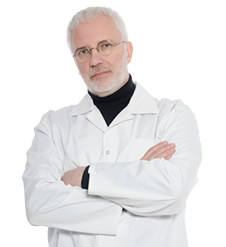
By Doctor Waldemar Weiss
14 October 2025
Rhinoplasty has evolved significantly over the past few decades. Older techniques, based on resection (removing cartilage and bone), have gradually given way to a more anatomy-respecting approach: structural rhinoplasty. This modern technique, performed by Doctor Waldemar Weiss in Paris, delivers results that are natural, harmonious and stable over time. Dr Weiss welcomes patients from around the world and is committed to providing the highest standard of care to international visitors.
What is structural rhinoplasty?
Structural rhinoplasty is built on a fundamental principle: rather than simply removing cartilage or bone to reshape the nose, the surgeon preserves, repositions and reinforces the nasal structures. Cartilage grafts, most often harvested from the nasal septum or the ear, are used to precisely reconstruct and refine the nose.
This surgical philosophy treats the nose as a three-dimensional architecture whose balance must be respected. Every gesture aims to improve the shape while preserving — or even strengthening — the overall structural integrity. The result is a nose that retains its natural character and ages gracefully with the face.
Why older resection techniques can cause problems
For many years, rhinoplasty essentially consisted of removing tissue: shaving down a bony hump, trimming cartilage deemed excessive, refining the tip by cutting the alar cartilages. While these manoeuvres could achieve an initially satisfying result, they considerably weakened the nasal framework.
The consequences of this weakening often appear over time: a drooping tip, pinched nostrils, visible irregularities beneath the skin and breathing difficulties. Deprived of its structural support, the nose gradually deforms under the effects of scarring and skin ageing.
It is precisely to avoid these pitfalls that structural rhinoplasty has established itself as the gold-standard technique within the international surgical community.
The principles of structural rhinoplasty as practised by Dr Weiss
Doctor Weiss holds a specialised university degree in facial surgery (University of Grenoble) and is a member of the Rhinoplasty Society of Europe. He applies the principles of structural rhinoplasty with an unwavering commitment to natural-looking results and surgical precision.
Personalised analysis before every procedure
Every nose is unique, and every face has its own proportions. Before any structural rhinoplasty, Dr Weiss carries out a thorough morphological analysis. The goal is not to apply a standardised template, but to develop a bespoke surgical plan tailored to the patient's anatomy and realistic expectations.
The use of cartilage grafts
Cartilage grafts are the cornerstone of this technique. Harvested from the septum (nasal partition) or the ear cartilage, they allow the surgeon to:
- Reinforce the nasal tip to prevent it from drooping over time
- Smooth the profile after hump removal
- Support the nasal valves to preserve or improve breathing
- Project or refine the tip with precision
Preserving respiratory function
Structural rhinoplasty never separates aesthetics from function. Every modification to the nose's shape is considered in light of its impact on the airway. A nose that breathes well is a nose that functions properly — this is a fundamental criterion for success.
Who is structural rhinoplasty suitable for?
Structural rhinoplasty is suitable for anyone wishing to reshape their nose in a lasting and natural way. The most common requests include:
- Reducing a nasal hump
- Refining a nose that is too wide
- Correcting a drooping, round or asymmetric tip
- Correcting a deviated septum
- Harmonising the nose with the rest of the face
During the consultation, Dr Weiss honestly assesses whether surgical rhinoplasty is the best option or whether a non-surgical approach — non-surgical rhinoplasty using injectable fillers — may better address the patient's concerns.
How the procedure is performed
Structural rhinoplasty is performed under general anaesthesia and typically lasts between 1.5 and 2.5 hours, depending on the complexity of the case. Dr Weiss favours the open approach (a discreet incision beneath the columella), which provides optimal visibility of the structures to be reshaped.
After the procedure, a thermoplastic splint is placed on the nose for 7 to 10 days. Bruising and swelling are expected and gradually subside over the following weeks. The final result can be appreciated between 6 and 12 months, once the tissues have fully stabilised.
Natural, long-lasting results
The major advantage of structural rhinoplasty lies in the long-term stability of its results. By rebuilding rather than removing, the surgeon creates a nose that maintains its shape over the years. The cartilage grafts integrate with the patient's own tissues and provide lasting support.
Dr Weiss places great importance on post-operative follow-up. Regular consultations allow him to monitor the healing process and support the patient throughout their recovery journey.
Why choose Dr Weiss for your rhinoplasty?
Doctor Waldemar Weiss is one of the few surgeons in France to hold a university degree specifically dedicated to facial surgery. His specialised training and experience in structural techniques enable him to offer an exceptionally high level of expertise in this demanding field. With a truly international practice, Dr Weiss regularly treats patients from across Europe and beyond, providing personalised care adapted to the needs of those travelling to Paris for surgery.
His philosophy rests on three pillars: natural-looking results, patient safety and honest advice. During the consultation, he takes the time to listen, explain and propose a realistic plan — without ever making excessive promises.
To learn more or to book a consultation, please visit the photo gallery or contact the practice.
Patient reviews
J'ai été opérée par le Docteur Weiss et je ne peux que le recommander les yeux fermés. C'est un médecin extrêmement professionnel, très compétent, à l'écoute.
Ma femme a réalisé une liposuccion avec le Dr Weiss et tout s'est parfaitement déroulé. Chirurgien très professionnel, à l'écoute, rassurant et extrêmement sérieux. Le suivi est impeccable.
Le Dr Weiss est un chirurgien exceptionnel. Professionnel, à l'écoute et bienveillant. Son expertise et sa précision sont remarquables.
Would you like to know more?
Dr Weiss welcomes you for a personalised consultation and a bespoke surgical plan tailored to your anatomy and expectations.